
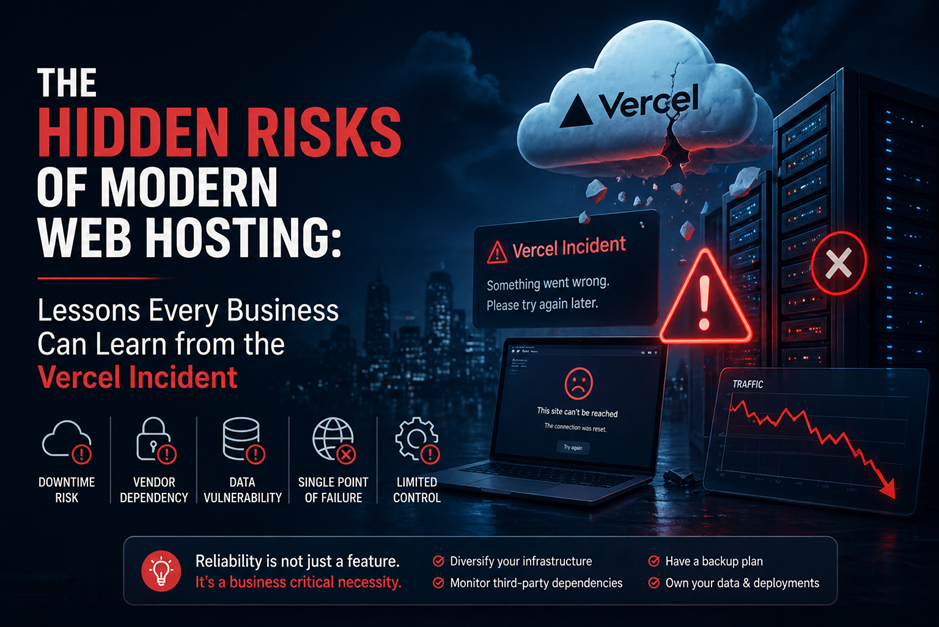
The recent security incident at Vercel sent a shiver down the spine of the web development world. But if you look past the headlines, the story isn’t just about a cloud platform getting hacked. It is a masterclass in the hidden risks of our modern, interconnected tech stacks.
For years, we have treated “supply chain security” as checking our npm packages and locking our dependencies. The Vercel incident proved that our definition of the “supply chain” is dangerously narrow.
What Actually Happened?
On April 19, 2026, Vercel confirmed a breach. Contrary to the initial panic, the attackers didn’t crack Vercel’s core infrastructure through a zero-day exploit in Next.js. Instead, they walked in through a side door: a third-party AI tool called Context.ai.
A Vercel employee had used their corporate Google Workspace account to sign up for this tool. When Context.ai was compromised, attackers leveraged its Google Workspace Auth access to pivot into the employee’s account. From there, they moved laterally into Vercel’s internal systems.
The critical payload? Environment variables.
The attackers enumerated project environment variables that were not explicitly marked as “sensitive.” In Vercel’s architecture at the time, “non-sensitive” variables were readable to internal systems (and thus, the attackers), while “sensitive” ones remained encrypted and safe. The breach wasn’t a failure of encryption technology; it was a failure of default configurations and identity trust.
The Hidden Risks Exposed
This incident shines a harsh light on two structural weaknesses that exist in almost every modern company:
- The OAuth Trojan Horse
We obsessively audit code libraries, but we rarely audit the productivity tools our developers use. Every time an employee clicks “Sign in with Google” and grants permissions to a new AI summarizer or calendar app, they are punching a hole in your perimeter. The attacker didn’t need to break Vercel’s firewall; they just needed a trusted token from a vendor Vercel trusted. - The “Default-Insecure” Trap
The distinction between “sensitive” and “non-sensitive” environment variables is a UI nuance that had catastrophic consequences. Security by design demands that systems be secure by default. Relying on developers to manually toggle a “sensitive” flag for every API key is a gamble that human error will eventually lose.
Lessons for Every Business
The takeaway here isn’t to stop using Vercel or cloud platforms. It is to stop trusting them and your own tools – blindly.
- Audit Your OAuth Sprawl: Treat every SaaS integration as a vendor relationship. Review which third-party apps have access to your corporate Google or Microsoft environments. If a “free AI tool” requests read access to Drive or Mail, deny it.
- Assume “Non-Sensitive” is Public: Never rely on a hosting platform’s storage convenience for your core secrets. If a variable contains a key, token, or password, it belongs in a dedicated secrets manager (like HashiCorp Vault or AWS Secrets Manager), not just pasted into a deployment dashboard.
- Decouple Identity from Access: The attacker pivoted from a Google account to internal infrastructure. Enforce strict hardware-based authentication (like YubiKeys) for accessing production environments, ensuring that a stolen session token isn’t enough to grant the keys to the kingdom.
The Vercel incident is a warning: in 2026, your security posture is only as strong as the weakest AI tool your newest employee decided to try out this morning.