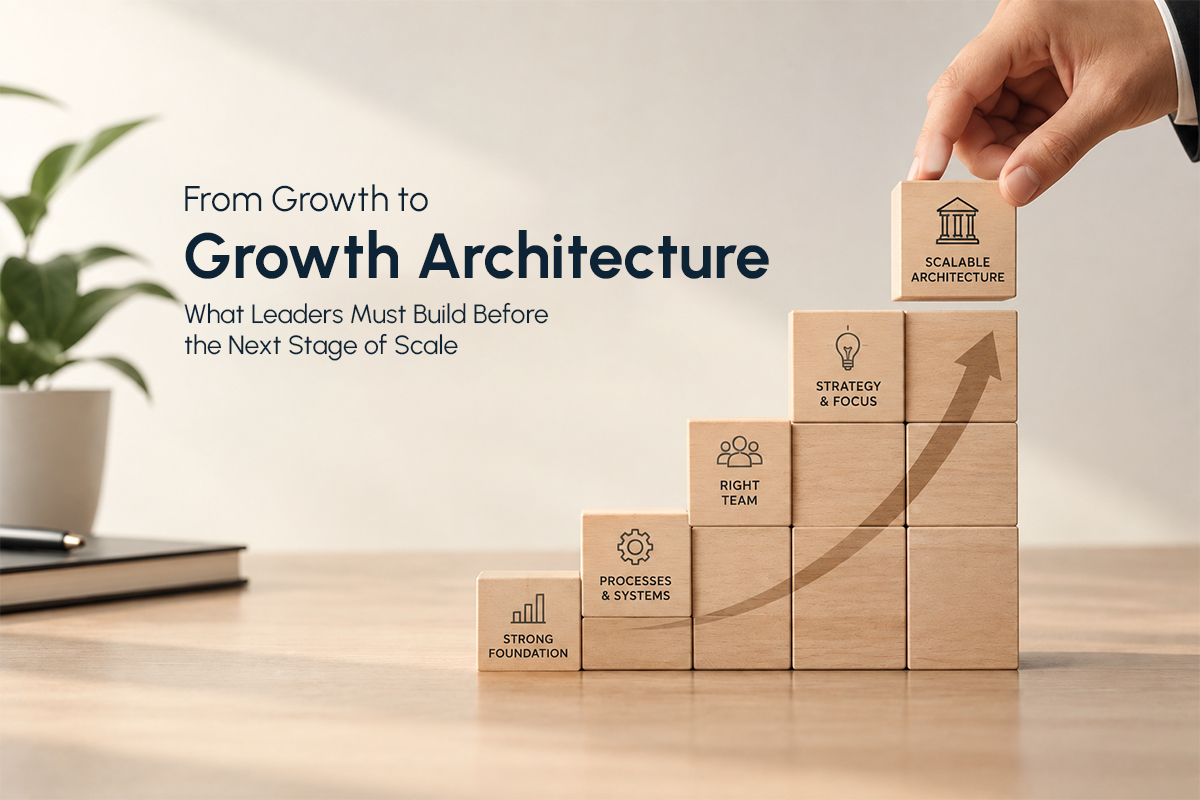
Growth architecture is the set of systems, people, data and habits that lets a company grow without breaking leaders must build it before the next stage of scale. I have watched strong companies stall, not because the market turned, but because nothing underneath them was ready for more weight. If you feel busy but not steady, I know that feeling this article is for you. I will share what I have seen, what the research says and the simple steps I give leaders at Paaras Panndya, so you can build the structure calmly instead of during a crisis.
Why Busy Does Not Mean Strong
Every leader I meet has a plan for more customers, more revenue and more markets. That matters I respect the ambition. But a plan only tells you where to go it never tells you whether your people can survive the trip. A business growth strategy on paper needs a body to carry it out that body is made of ownership, tools and trust.
Research shared by Workday, drawing on McKinsey, found that 78 percent of companies that reach product market fit still fail to scale after launch. They had the idea. They lacked the machinery.
What the Structure Really Looks Like
Think of a building. Nobody admires the foundation, yet every floor above depends on it. Your company works the same way. Somewhere between the first big win and the tenth, the pipes, the wiring and the load-bearing walls need to be designed on purpose. Most leaders design them in a panic after something cracks.
The better path is to build them while things are calm. So I ask the leaders I work with to pause for one afternoon and write down what holds everything up. That page is your growth strategy framework it has four parts.
The Four Parts I Ask Leaders to Build When Scaling a Business
First comes people. Not headcount, but clear ownership. Every important outcome needs one name next to it every leader needs to know what they can decide without asking permission. When scaling a business, this clarity becomes critical because growth quickly exposes gaps in ownership.
Second comes systems. If it exists solely inside your top performer’s brain, it’s not a process; it’s a risk. Write it down, improve it, and teach it.
Third, you need data. You don’t need a complex dashboard. You need three or four numbers that speak the hard truth to you every week, no matter how painful it may be to hear.
Finally, there’s rhythm. Your meetings, reviews and decision-making must have a consistent rhythm so you’ll know at all times what matters this month.
A Lesson I Learned the Hard Way
I once watched a founder double his revenue, then lose half his team. Scalable business growth is not about how fast you climb, it is about whether the structure can hold the weight when you get there. He felt that in his chest, so did I.
How to Start Without Slowing Down
You do not have to stop selling to build any of this. Pick one part, give it thirty days and one owner protects that time like a client meeting. Small, boring fixes compound faster than big announcements. I have seen a simple weekly review change how a whole company breathes.
Then look outside your own walls. McKinsey writes about business building as a repeatable skill, not a lucky streak I agree with that view. Skills can be taught, tested and improved. Luck cannot. Nobody is born knowing how to run a bigger company. Turn every hard lesson into a habit your team owns.
Frequently Asked Questions
What is growth architecture?
It is the structure under your growth. It brings together clear ownership, written systems, honest data and a steady meeting rhythm, so the company can carry more customers without stress.
Why do so many companies fail to scale?
Usually the idea is fine. The people and systems are not ready when demand arrives, so small cracks turn into big ones. Growth exposes every weakness nobody had time to fix.
How long does it take to build this structure?
In my experience a first working version takes about three months. Begin with the part that hurts most, fix it properly, then move to the next. Steady progress beats a big launch.
What should a leader measure first?
Pick three or four numbers that tell the truth every week, like cash, delivery and customer retention. If a number never changes a decision, drop it.
What’s the greatest risk in scaling business operations?
To go faster than your people can follow is the worst mistake. Speed masks confusion for a time and then the bill comes all at once. Just slow down long enough to get things written down, owners named and your numbers checked. It feels small today yet feels like freedom later.